Teach Math Concepts by Using Financial Literacy in the Classroom

Integrating real-world math into your existing curriculum can seem like a daunting task. However, elementary and middle school students are thirsty for financial literacy and eager to learn about money. They are already in the early stages of developing their financial ethos, which makes it an impactful time to show them the importance of financial education. Sixth-grade math teacher, Jen Kosior, decided to incorporate financial literacy in the classroom to better infuse her math curriculum with a real-world slant. In leveraging digital lessons, she offered students multiple points and methods of engagements – and a plus for her, it would all be self-graded. Sound too good to be true? Read on to hear how Jen used a combination of free digital elementary school finance lessons from Vault: Understanding Money and Google Forms to teach her sixth-graders rational numbers.
Using Financial Literacy in the Classroom
I have a few education philosophies for teaching math concepts:
- Technology is one of the most powerful tools in education.
- Technology needs to be used in transformative ways to help enhance students’ education.
I decided to use Everfi in the math extension class after we completed our rational number chapter. Students often ask, “When am I going to use this?” and I always try to give them logical examples. Financial literacy is a great example of how we use rational numbers in real life. Completing Vault: Understanding Money after we worked with rational numbers was perfect timing. Students were able to understand how numbers work in their lives every day.

Using Everfi’s Personal Financial Literacy Resources, Google Forms, & Small Group Lessons
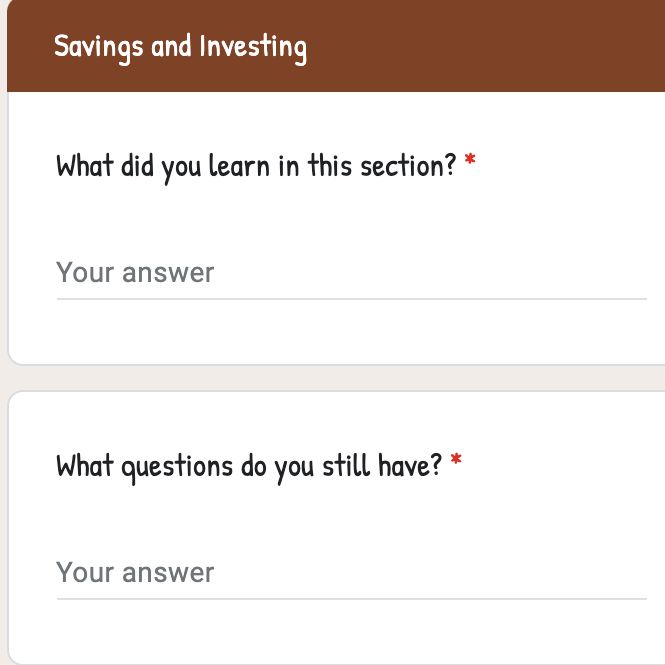
Since the students worked through the Vault lessons at different paces, I was having a hard time being able to do the lessons that accompanied the program. So, I decided to use technology to my advantage. I created a Google Form that asked some of the questions from the lessons. Once I had about five students complete the form, I pulled that small group together to talk about their answers and discuss different aspects of the lesson. By doing so, I was able to meet the needs of the students at their pace. The Google Form has really allowed me to keep both the students and myself accountable. It also gives me a record of what they understand, what they continue to struggle with, and what I can do as a teacher to help them.
Prepare to Use Financial Literacy to Teach Math Concepts
In order to get started in implementing a rational numbers extension unit on financial literacy, you will need to do the following:
- Sign up for an Everfi account. It’s free and quick to set up.
- Access the Resources for Vault: Understanding Money, especially the Assessment Key, Modules 1-6 Lesson Plans, and the Vocabulary Bank.
- Set up your Google Form – this is what we used. You can include questions related to math and personal finance, vocabulary, or even those directly from Vault’s lessons.
When I reviewed the answers to the questions on the Google Form, I was able to see that the students were taking the middle school financial literacy topics that we had talked about in math class and applying them to the questions relating to Everfi. I also heard more students referring to real-world examples in math class that related to things that they had learned in Everfi. You could also use the data from the Everfi course to drive instruction.
The students really enjoyed it – there’s nothing more honest than the round of cheers on an Everfi Everfiday.
Incorporating financial literacy in the classroom shouldn’t just be limited to math class, though. Some of the successes that I have seen are students taking what they learn through the Vault program and applying it to other classes. In reading class, one of the students referenced what they had learned about wants versus needs, applying it to the story. Hearing students taking something from a math extension lesson and using it in other classes, and ideally their life, is the best outcome I could have expected.
The students enjoy being able to make comments and ask questions on the form because it gives them the freedom, to be honest. Teaching financial literacy not only gives students valuable life skills but also a chance to vocalize their needs and wants for education.
Jennifer Kosior is a sixth-grade math teacher from Pittsburgh, PA. In her 18 years in education she has taught at a variety of grade levels, worked as an acting assistant principal, and was one of 50 Coaching Fellows to be part of the inaugural year of the Dynamic Learning Project. Jen received her BSEd from Shippensburg University, a Masters in Multimedia Technology from Duquesne University, and a Masters in Public Management from Carnegie Mellon.

Want to prepare students for career and life success, but short on time?
Busy teachers use Everfi’s standards-aligned, ready-made digital lessons to teach students to thrive in an ever-changing world.
Free for K-12 Educators
Thanks to partners, we provide our digital platform, training, and support at no cost.
See why 21K schools use Everfi.