Financial Education, Workforce Readiness
FutureSmart™:
Financial Literacy
- Financial Values
- Growing a Business
- Savings Strategies
- Smart Shopping
- Your Financial Future
Why Adopt This Course?
Build financial confidence during these critical decision-making years with engaging, story-based learning that connects to students’ lives. The course helps middle school students plan out their daily finances and guide them in constructing a blueprint for their future. Through interactive exercises, students learn to make real-life decisions about their personal finances, as well as how to achieve important goals around saving money, education and career planning, and budgeting. The curriculum has been independently validated to meet ESSA Level III, which demonstrates that usage of the digital course shows a positive, statistically significant relationship with students’ financial knowledge, self-efficacy, and behaviors.
At-A-Glance
Grade Level
6th, 7th, 8thLength
7 digital lessons, 25 min each, and up to 9 hr of offline learning
Language
Standards
Jump$tart Coalition’s National Standards for K-12 Personal Finance Education; National Curriculum Standards for Social Studies
Curriculum Fit
Economics, Business, Social Studies, Career Readiness, and Advisory

Students are introduced to the FutureSmart Help Squad and how they will be joining as an intern to help people in their community struggling with financial issues. Students also reflect on their own personal financial priorities, habits and mindsets through a “Financial Personality Test.”
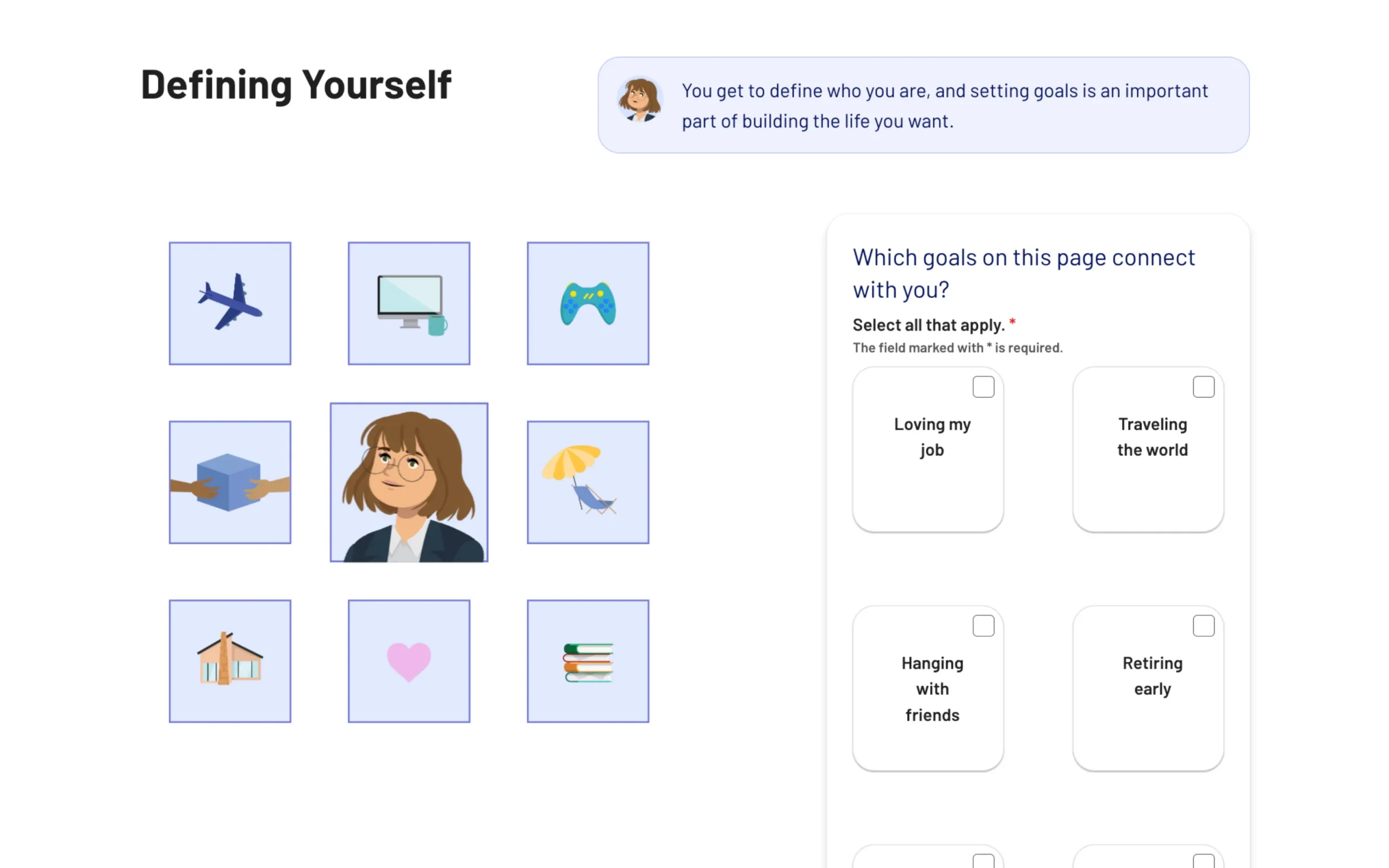
Students are introduced to David, a middle school student that wants to redecorate his room on a limited budget. Students must prioritize David’s budget, use comparison shopping methods to decide which specific items to buy, research upcoming spending decisions, and make smart choices about when to spend or save.
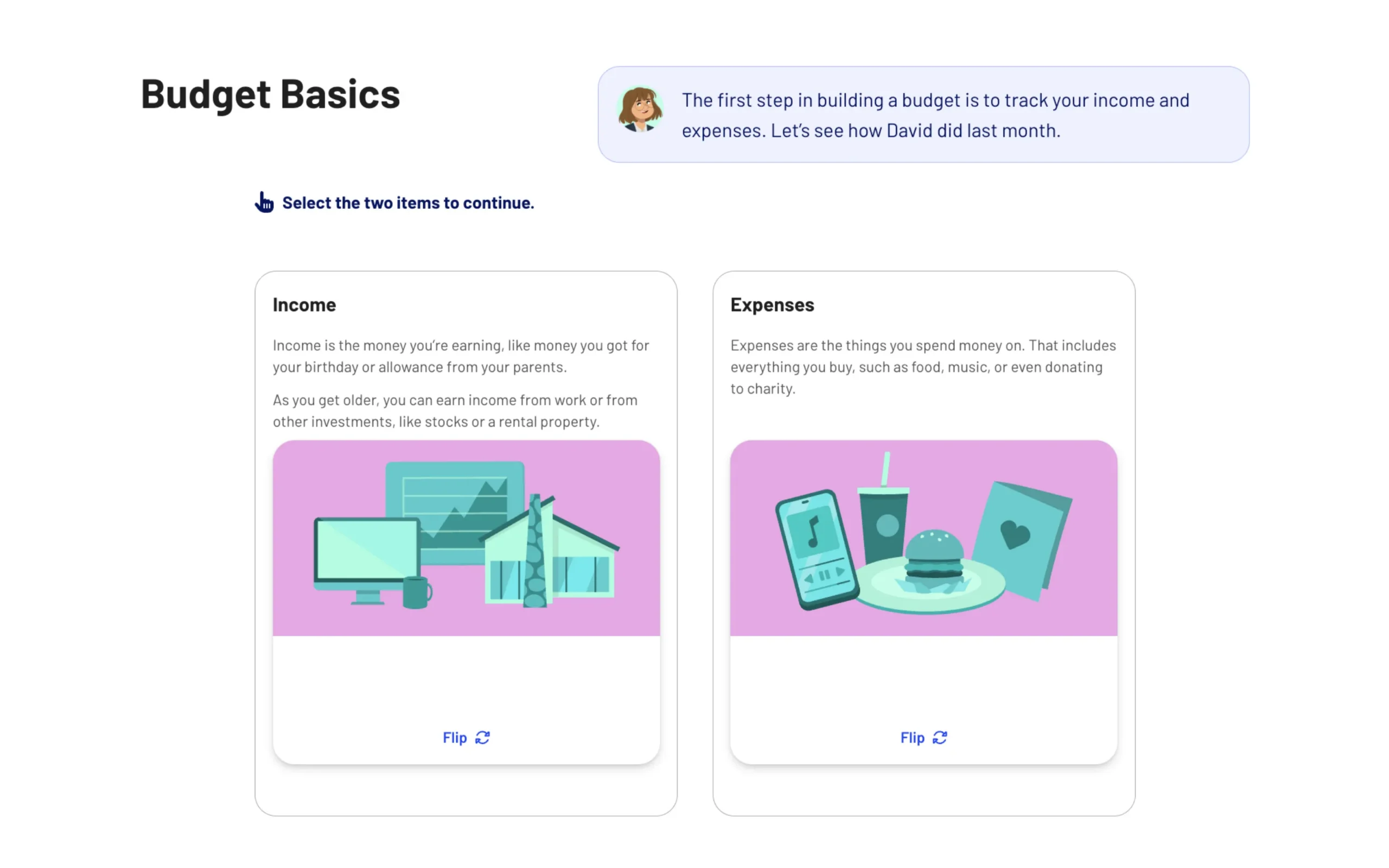
Students meet Trevor, a college student who needs help saving for an end of summer trip, while managing his day-to-day expenses. Students must help him select a job, review his paycheck and credit card statement, and help him make decisions about when to utilize different payment types.
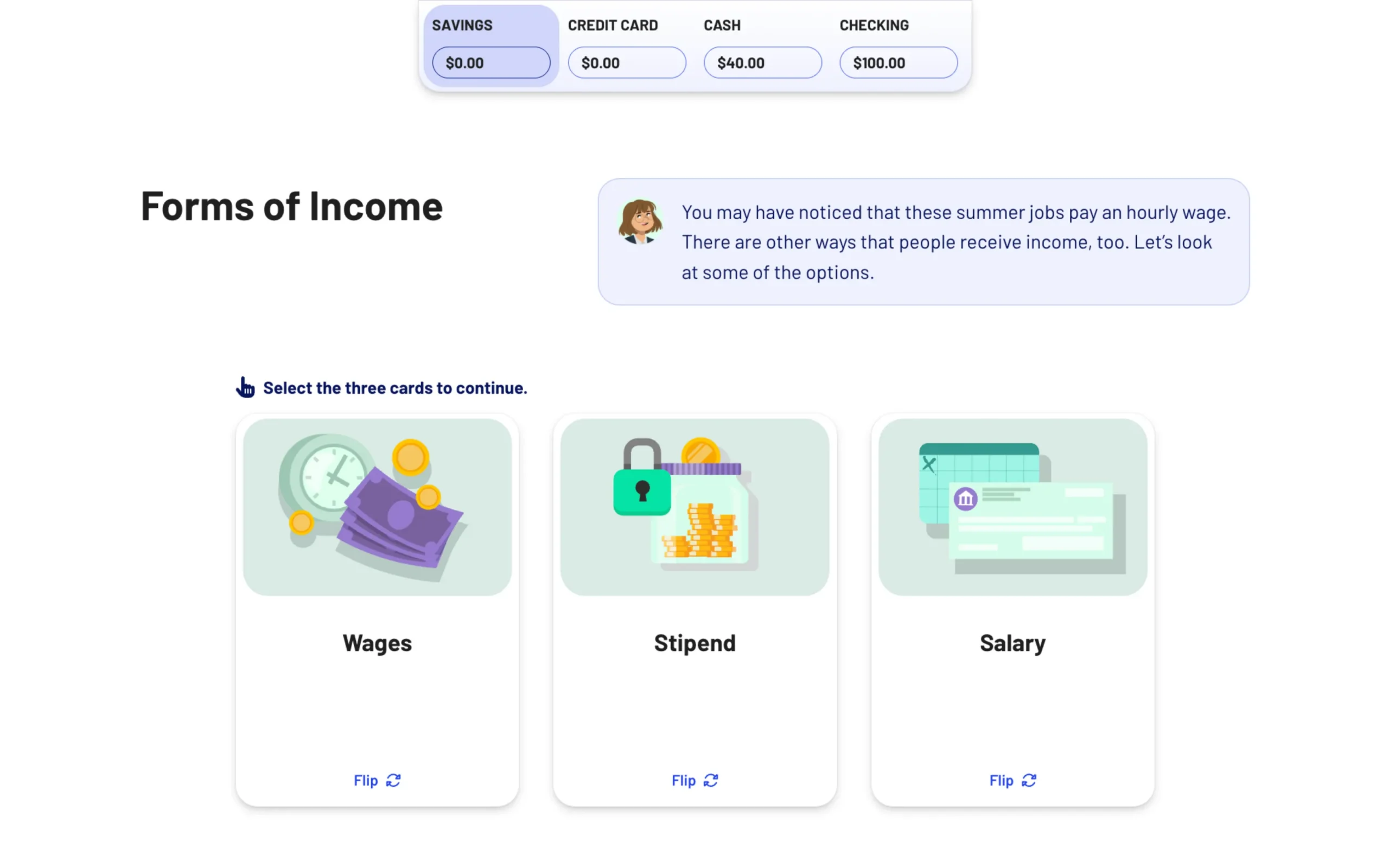
Students advise Sydney, a high school student, on her future career path. Students must help her narrow down the career path she’d like to pursue—by examining her skills and interests, the career’s income potential, and its education and training requirements. Afterwards, students help Sydney find ways to reduce the out-of-pocket cost of her first year of post-secondary education.
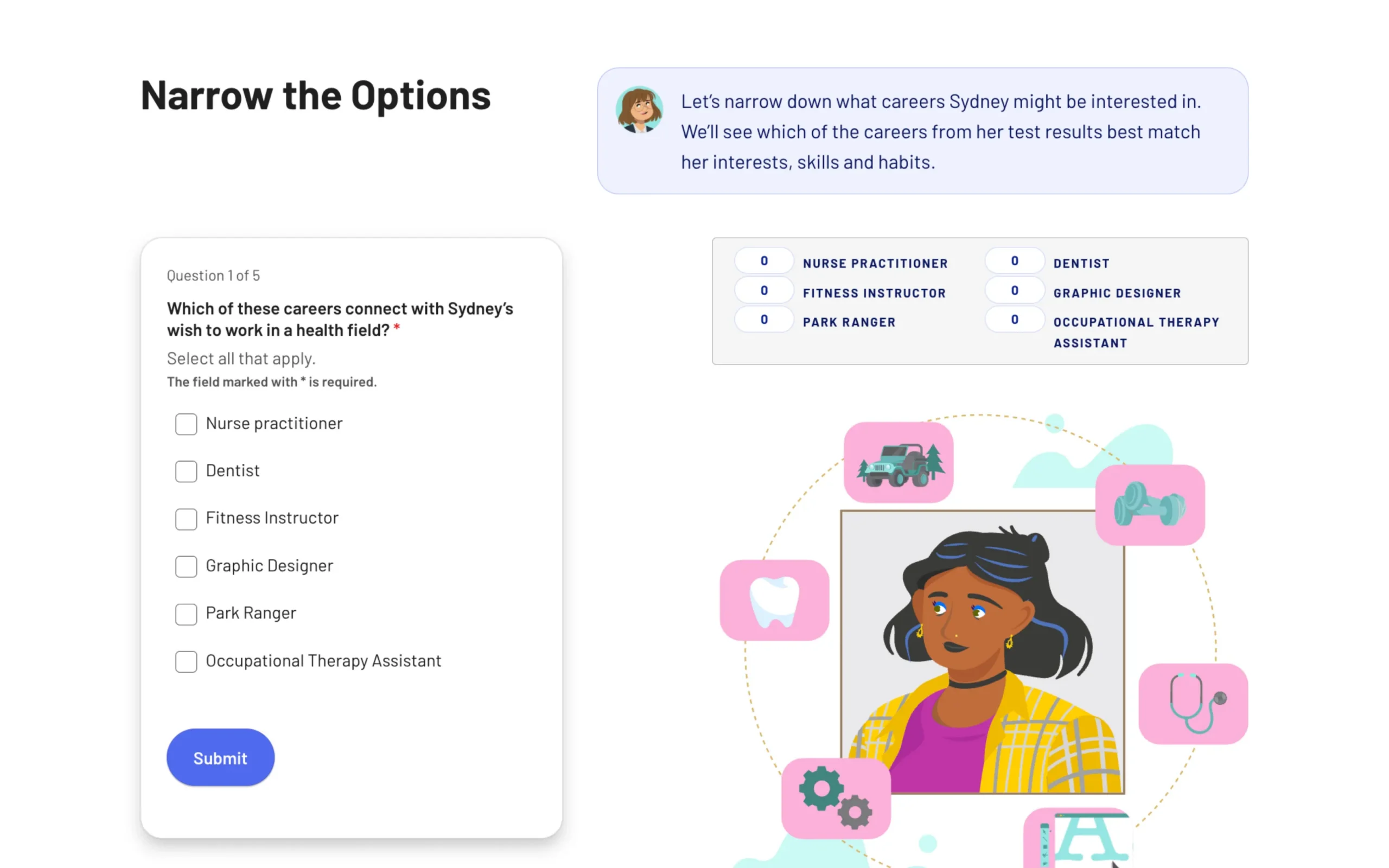
Students help Mia, a business owner, calculate her monthly profit and loss, and devise a strategy to save up for new capital for her business. Students must help the business owner open savings and checking accounts, grow her money faster with a certificate of deposit, and make monthly transaction decisions.

Students accompany Chris, as a recent college graduate, as he goes through a “life simulation”, helping him make insurance and investment decisions at critical life milestones. Students help Chris select different insurance policies (and experience how random, unexpected occurrences can lead to financial loss) and help him adjust his investment portfolio as he nears retirement age.

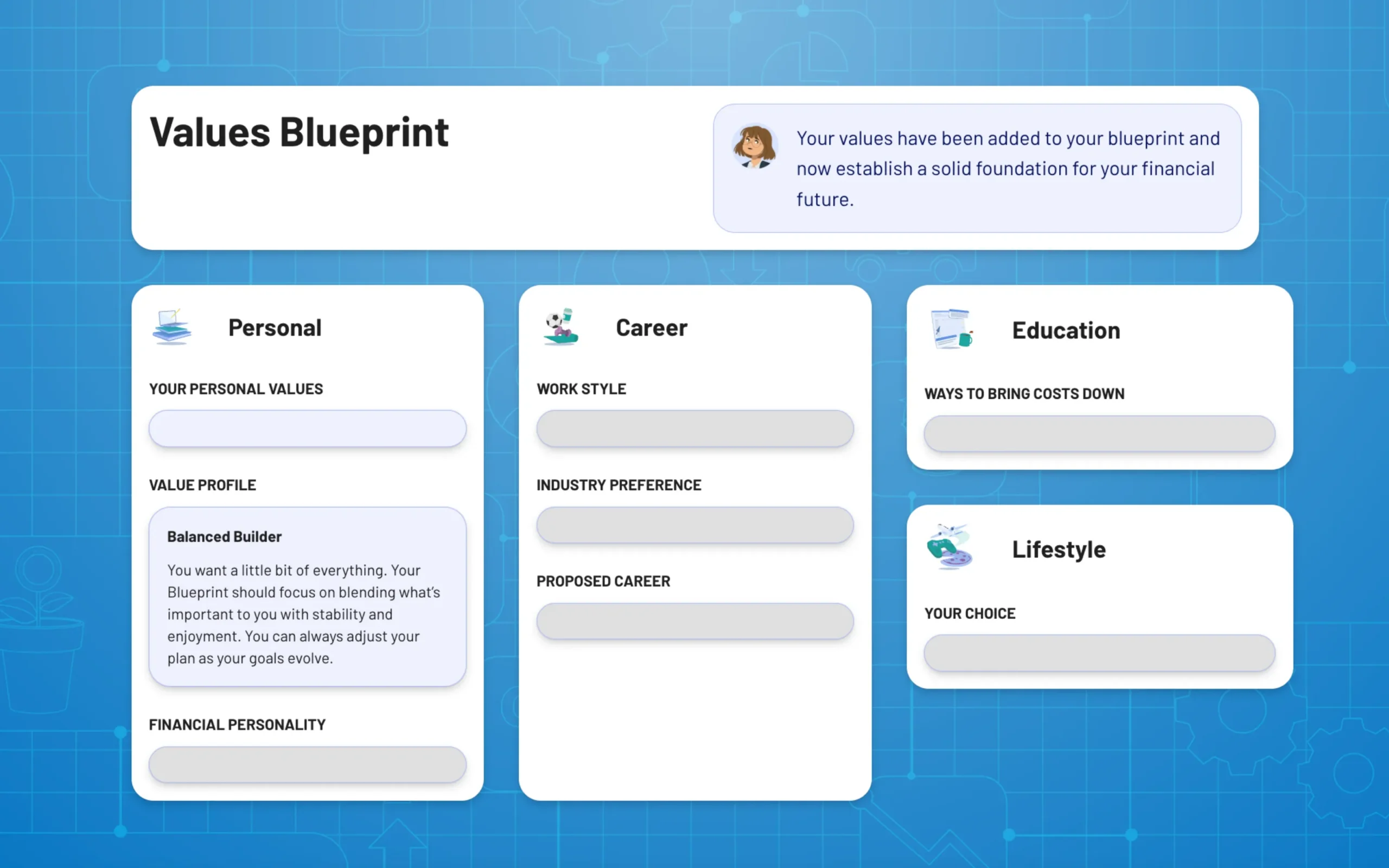
Using their knowledge and experience from the course, students set their own financial goals and make plans for their future. The students’ answers create a portfolio piece—their “Blueprint” — that can be printed or shared with others. This personalized document details the student’s future career interests, plans for postsecondary education, and next action steps.
Students are introduced to the FutureSmart Help Squad and how they will be joining as an intern to help people in their community struggling with financial issues. Students also reflect on their own personal financial priorities, habits and mindsets through a “Financial Personality Test.”
Students are introduced to David, a middle school student that wants to redecorate his room on a limited budget. Students must prioritize David’s budget, use comparison shopping methods to decide which specific items to buy, research upcoming spending decisions, and make smart choices about when to spend or save.
Students meet Trevor, a college student who needs help saving for an end of summer trip, while managing his day-to-day expenses. Students must help him select a job, review his paycheck and credit card statement, and help him make decisions about when to utilize different payment types.
Students advise Sydney, a high school student, on her future career path. Students must help her narrow down the career path she’d like to pursue—by examining her skills and interests, the career’s income potential, and its education and training requirements. Afterwards, students help Sydney find ways to reduce the out-of-pocket cost of her first year of post-secondary education.
Students help Mia, a business owner, calculate her monthly profit and loss, and devise a strategy to save up for new capital for her business. Students must help the business owner open savings and checking accounts, grow her money faster with a certificate of deposit, and make monthly transaction decisions.
Students accompany Chris, as a recent college graduate, as he goes through a “life simulation”, helping him make insurance and investment decisions at critical life milestones. Students help Chris select different insurance policies (and experience how random, unexpected occurrences can lead to financial loss) and help him adjust his investment portfolio as he nears retirement age.
Using their knowledge and experience from the course, students set their own financial goals and make plans for their future. The students’ answers create a portfolio piece—their “Blueprint” — that can be printed or shared with others. This personalized document details the student’s future career interests, plans for postsecondary education, and next action steps.