5 Reasons Why STEM Career Training Should Start in Middle School
Well-planned, well-spoken STEM guest speakers are every classroom’s greatest gift when it comes to visitors. While there are researched benefits to inviting strong speakers to share with your students, my motive for bringing in guests was to challenge stereotypes, to further offer context for the real-world, and to nudge along the imaginings of my students’ own futures. Like any good lesson, to ensure my goals were met and my students engaged, I needed a plan.
- A Unique Dose of Reality
Imagine learning to create algorithms for better music playlists or prototyping and manufacturing a new running shoe – at the age of twelve. Traditionally, training for careers in science, technology, engineering, and math (STEM) has focused on college students. But if our goal is to encourage more students to pursue STEM-related careers, research shows that STEM career training should start much earlier – ideally in middle school. Here’s why.
Academic Interest Often Wanes in Middle School
Middle school can be a tumultuous time for students, when social priorities outweigh academic ones. Unfortunately, students who form negative opinions of math and science often retain those biases – permanently. According to a 2008 study commissioned by the Australian Department of Education, by the time students reach high school, many view science as “uninteresting, unimportant, and irrelevant to their lives.” But programs in middle school that help “connect the dots” between STEM and real life make science and math feel relevant for kids, keeping them engaged and interested.
Career Aspirations Begin in Middle School

Paradoxically, while academic interest often wanes in the middle-school years, these students are already forming serious opinions about future career paths. Exposure to STEM career awareness programs during this time triggers students to seriously consider jobs in engineering, technology, manufacturing, biology, etc. Many are perhaps looking at these career possibilities for the first time. These aspirations inform critical future choices, such as choosing STEM classes in high school or even applying to STEM-centered magnet schools. These small decisions are what lead to adult careers in STEM fields.
STEM Training Teaches Problem Solving
Not every student who takes STEM classes in middle school will pursue a STEM-related career, but the skills they gain can be applied to any field. This is especially critical in a world where employers value problem solving and critical thinking abilities over college majors, according to new research from the Association of American Colleges and Universities. Since STEM programs specifically hone analytical reasoning and problem solving, all students stand to benefit from learning these valuable skills.
Early STEM Career Training Helps Close the Gender Gap
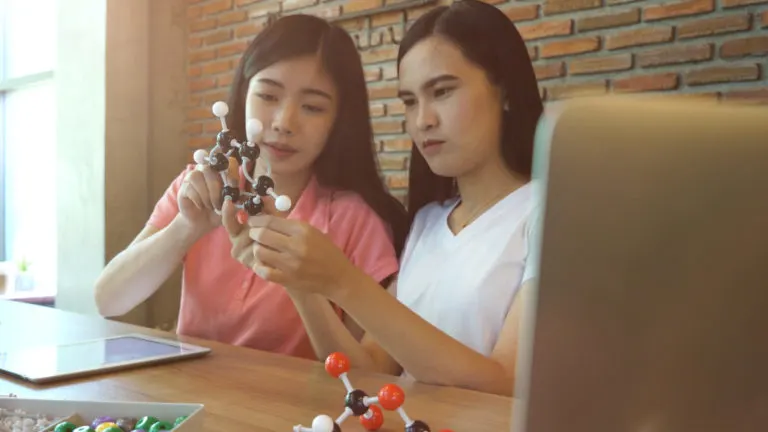
According to the National Girls Collaborative Project, women make up half of the total U.S. college-educated workforce but comprise only 29 percent of the science and engineering workforce – despite the fact that boys and girls perform equally in STEM education. In order to close this gap, early intervention must be implemented to remedy gender-specific stereotypes. Exposing girls to STEM career education – early on – prevents girls from feeling shut out of STEM careers and empowers them to consider career paths that might otherwise feel unachievable.
STEM Education Facilitates Hands-On Learning
Engaging, hands-on learning is critical to reaching middle-school students – and, done right, STEM education is the perfect vehicle. Instead of suffering boredom during long lectures, students should be inspired to fully engage in projects: conducting experiments, making decisions, and learning through trial and error. And by exposing students to STEM through interactive, kid-centric programs, like Everfi’s Endeavor platform(opens in new tab), teachers can transform sometimes intimidating material into memorable learning experiences.
Recap
In today’s technology-driven world, more than half of all students will be expected to use STEM as part of their future careers. Providing them with both exposure and career training is a must. The earlier that training begins, the more likely that students will understand and consider STEM careers and be empowered with the skillsets to succeed professionally – wherever their adult lives take them.
If your students are already learning about careers with Endeavor – STEM Career Exploration or Future Goals – Hockey Scholar, consider your access to Sports Statisticians, Researchers, or Engineers at local product manufacturers. You’ll find a brief list of careers aligned to Everfi STEM programs at the end of the article.
- The Right Timing
I learned that carefully selected, well-timed speakers can provide depth for a unit or lesson. Rather than finding yourself at the mercy of a school career day or holiday to locate a guest, consider scheduling one speaker per unit, theme, or quarter. This will allow you to both make a meaningful choice for your students’ learning and give your speaker stronger context for their own presentation.
If you’re struggling to find a local match who fits your window of opportunity, consider video conferencing. The Skype a Scientist program matches scientists with classrooms around the world for 30-60 minute Q & A sessions (for free!).
- Setting the Stage
Prepping the key players (your speaker and students) is the most critical component to a successful visit.
For Your Speaker: In initial communications with your speaker, be clear about your expectations, what in particular would be important for your students to learn, and information about your students and unit. Broad prep could lead to broad speaking points, which often leads to a lack of engagement. Let your speaker know any options for technology like a slide deck or their access to certain internet sites (video in particular.)
With Your Students: Schedule time to “introduce” your guest about a week before they join your class. Begin by sharing highlights of the speaker’s profile with your students. Spend time as a group brainstorming potential questions to ask during their visit. What do they want to take away from the experience?
- Getting the Most Out of the Experience:
Be sure to debrief after your speaker and ask your students to reflect on what they learned or new sparks of interest. Other than your typical thank you note, how can you best extend the relationship with a guest speaker and keep them coming back each year? With younger classrooms, consider writing a class letter with any lingering questions quarterly. This will help your speaker stick with your students long after they’ve been present in your room. For our high school students, access to STEM mentors is a persistent need. Are there particular students who would be interested in staying connected? If your speaker doesn’t mind, encourage students to send emails with any career or higher education questions in the future.
Speaker Careers Aligned to Everfi STEM Programs:
- Industrial Engineer: Design products for commercial production such as toys, consumer appliances, furniture, or cars.
- Radiographer: Analyze and explain medical images such as X-rays, CT scans, ultrasounds, and MRIs and uses them to figure out health problems in patients.
- Front End Developer: Design, create, and modify websites. Responsible for the look and layout of websites.
- Clinical Research Coordinator: Plan, direct, or coordinate clinical research projects. Evaluate and analyze resulting test or project data.
- Petroleum Engineer: Petroleum engineers are the innovative people who find the best solution for extracting out oil and gas from below the Earth’s surface. Sometimes this involves designing entirely new tools.
- Sports Statistician: Gather and synthesize information on sports performances, often in real time to provide insight into the performance of athletes and teams.
- Data Journalist: Write or edit data-focused articles for newspapers, blogs, or other media sources.
Do you invite guest speakers to your STEM classroom? Which types of speakers did you find had the most impact on your students and why? What careers most stand out for increased student engagement?

Amber Osuba is the Senior Marketing Manager for K-12. Prior to this role, Amber served as a Senior Implementation Manager supporting educators and districts across Pennsylvania and Maryland for three years. She is a former first grade STEM teacher and curriculum lead. You’ll find her at Everfi’s national conference booths asking teachers to grab swag, take a selfie and tag @Everfi.
Want to prepare students for career and life success, but short on time?
Busy teachers use Everfi’s standards-aligned, ready-made digital lessons to teach students to thrive in an ever-changing world.